Table of Contents
ToggleMaha Shivaratri 2026: Date, Muhurat, and Spiritual Secrets
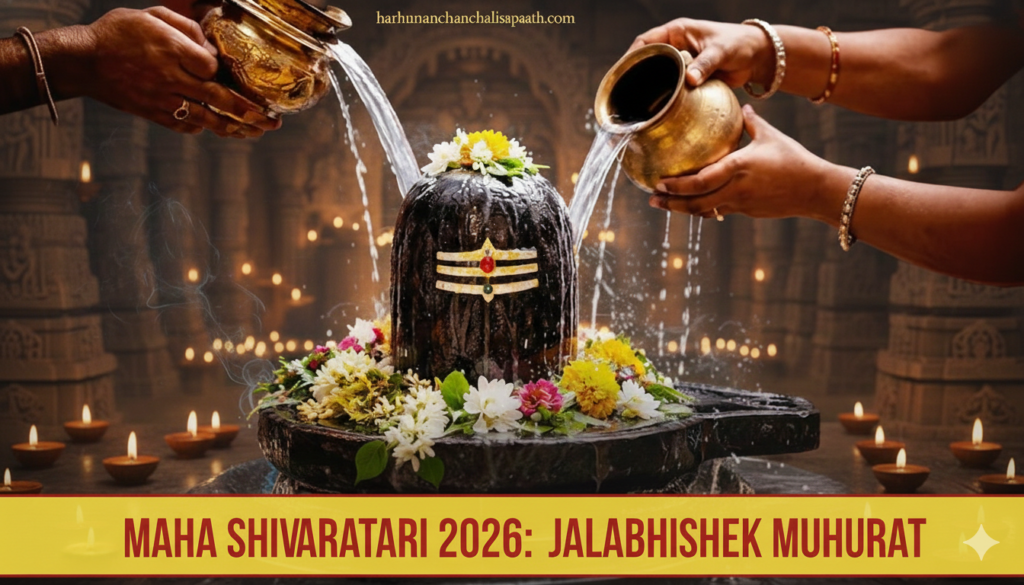
As we approach Sunday, February 15, 2026, the atmosphere is charged with the energy of Lord Shiva. At Hanuman Chalisa Paath, we recognize Lord Hanuman as the Rudra Avatar (the 11th incarnation of Shiva). Today, we bridge the gap between tradition and science to help you unlock the cosmic energy of this great night.
🕒 Maha Shivaratri 2026: Exact Timings (Muhurat)
The Chaturdashi Tithi begins on Feb 15 at 05:04 PM and ends on Feb 16 at 05:34 PM.
| City | Nishita Kaal (Midnight) Puja |
| New Delhi | 12:09 AM – 01:01 AM |
| Mumbai | 12:28 AM – 01:19 AM |
| Bengaluru | 12:15 AM – 01:06 AM |
| Kolkata | 11:25 PM – 12:16 AM |
💧 Maha Shivaratri 2026: Auspicious Timings for Jalabhishek
The act of Jalabhishek (offering water to the Shivling) is the most vital part of Maha Shivaratri. It symbolizes the cooling of Shiva’s cosmic fire and the purification of the devotee’s soul.
While you can offer water throughout the day on February 15th, the most merit is gained by performing the ritual during the Four Pahars (Quarters) of the night.
| Phase of Night | Auspicious Time (Feb 15th – 16th) |
| 1st Pahar | 06:11 PM to 09:23 PM (Feb 15) |
| 2nd Pahar | 09:23 PM to 12:35 AM (Feb 16) |
| 3rd Pahar (Most Sacred) | 12:35 AM to 03:47 AM (Feb 16) |
| 4th Pahar | 03:47 AM to 06:59 AM (Feb 16) |
The Correct Way to Perform Jalabhishek
To ensure your ritual is spiritually effective, follow these traditional steps:
The Vessel: Use a Copper (Tanba) vessel for water. However, if you are offering Milk, use a Brass or Silver vessel (avoid copper for milk).
The Direction: Always stand facing North. The North is the direction of Mount Kailash and is considered the source of spiritual energy.
The Flow: Pour the water in a slow, steady, and thin stream. It should not be poured all at once. An “unbroken stream” represents a mind focused solely on the Divine.
The Mantra: While the water flows, chant “Om Namah Shivaya” or “Sri Shivay Namastubhyam.”
🧘 The Path of Penance: Choosing Your Fast (Vrat)
Maha Shivaratri fasting is not “one size fits all.” Depending on your health and spiritual goals for February 15, 2026, there are three traditional ways to observe the fast:
1. Nirjala Vrat (The Most Powerful)
This is the strictest form of fasting where the devotee consumes no food and no water from sunrise on Shivaratri until the Parana (breaking the fast) the next morning. It is believed to provide the deepest “internal cleansing” and requires immense willpower.
2. Phalahar Vrat (Fruit-Based)
If you cannot go without water, the Phalahar path is recommended. This involves consuming only:
Fresh Fruits: Particularly seasonal fruits like Ber (Jujube), which is Lord Shiva’s favorite.
Milk & Curd: Pure dairy is considered Sattvic.
Water & Coconut Water: To keep the body hydrated for the night-long Jagran.
3. A Note on Sabudana (The Processing Debate)
While common in modern households, many dedicated seekers avoid Sabudana (Tapioca) on Maha Shivaratri. Why? Because it is a highly processed starch. If you are seeking a truly traditional experience, skip the Sabudana and choose unprocessed energy sources like:
Makhana (Fox Nuts): Roasted in a little Ghee.
Sweet Potato (Shakarkand): Boiled or roasted.
Nuts: Almonds and Walnuts for sustained energy.
🚫 Strictly Prohibited (Tamasi Foods)
To keep your energy (Prana) moving upward during the night, you must strictly avoid:
All Grains & Pulses: No Wheat, Rice, or Daal.
Table Salt: Only Sendha Namak (Himalayan Rock Salt) should be used if you are eating.
The “Two Evils”: Onion and Garlic are strictly avoided as they increase lethargy (Tamas), making it impossible to stay awake for the Jagran.
Caffeine: While people drink tea/coffee to stay awake, try to limit it. Excessive caffeine can cause dehydration during a fast.
🔱 The Science of Abhishekam: Why We Offer Specific Items
Pouring liquids over the Shivling is a form of “energy cleansing.” Each substance has a specific vibration:
Milk: For purity and a long life.
Honey: For “Madhurya” (sweetness in speech and relationships).
Ghee: To remove physical ailments and weakness.
Sugarcane Juice: Traditionally offered to attract wealth and prosperity.
Sandalwood Paste: To cool the mind and bring mental peace.
♈ 2026 Zodiac Remedies (Special Section)
To maximize the blessings of Lord Shiva based on your Moon Sign (Rashi):
Aries/Scorpio: Offer raw milk and honey to the Shivling.
Taurus/Libra: Perform Abhishekam with curd and white flowers.
Gemini/Virgo: Offer Bel Patra and Sugarcane juice.
Cancer: Offer milk mixed with a few grains of raw rice (Akshat).
Leo: Offer water mixed with jaggery or red flowers.
Sagittarius/Pisces: Offer yellow flowers or saffron-infused milk.
Capricorn/Aquarius: Offer black sesame seeds and gangajal.
🧘 Why Staying Awake is Non-Negotiable
On the night of Feb 15, the planetary alignment creates a natural centrifugal force in the human spine. If you stay awake with a straight spine, you allow your “Kundalini” energy to rise. This is why a simple nap can cost you the spiritual “recharge” this night offers.
🕉️ Powerful Mantras to Chant
Shiv Ji Ki Aarti: भगवान शिवजी की आरती (The basic yet most potent)
Maha Mrityunjaya Mantra (For health and longevity)
Shiva Panchakshari Stotram (To align the five elements)
Closing Thoughts
Maha Shivaratri isn’t about the quantity of milk you pour; it’s about the quality of your surrender. Since you are here at Hanuman Chalisa Paath, remember that chanting the Chalisa on this night is also highly effective, as Hanuman is the greatest devotee of Lord Shiva.
Har Har Mahadev!
❓ Your Maha Shivaratri 2026 Questions, Answered
Q1. Confused about the date? Is it Feb 15 or 16?
Mark your calendars for Sunday, February 15, 2026. While the lunar calendar (Tithi) stretches into Monday, the “Great Night” of Shiva is always observed when the 14th night hits its peak. For this year, that magic happens on Sunday night.
Q2. When is the best time for Puja tomorrow?
If you’re looking for that specific moment of high energy known as Nishita Kaal, set your alarm for the window between 12:09 AM and 01:01 AM (technically the very start of Feb 16). This midnight hour is when the veil between the physical and spiritual worlds is said to be thinnest.
Q3. Can I offer Tulsi or Haldi to the Shivling?
Actually, it’s best to avoid them. Lord Shiva is a hermit (Vairagi), and things like Turmeric (Haldi) are considered symbols of worldly beauty, while Tulsi is traditionally reserved for Lord Vishnu. To keep it simple and authentic, stick to Bel Patra, clean water, and Sandalwood paste.
Q4. Why the rule about staying awake all night?
It’s not just a test of endurance! Think of it as a cosmic alignment. On this night, there is a natural upward pull of energy in nature. By staying awake and keeping your back straight, you’re basically “lining up” your spine to catch this energy wave. If you sleep, you miss the recharge.
Q5. Is this fast only for certain people or unmarried women?
Not at all. While there is a beautiful tradition of unmarried women fasting to find a partner like Shiva, this night is for everyone. Whether you’re seeking a life partner, mental peace, or just a spiritual “reset,” Mahadev welcomes every heart that is sincere.
Q6. How does the Hanuman Chalisa connect to Shivaratri?
This is a favorite for many of us! Since Lord Hanuman is the 11th Rudra Avatar of Shiva, they are essentially the same divine essence. Chanting the Hanuman Chalisa on this night is like calling out to Shiva’s most active, protective, and devoted form. It adds a whole different level of strength to your prayer.
Q7. I’m hungry! When and how do I break the fast?
Patience is key! The Parana (fast-breaking) should happen after sunrise on Monday, February 16, between 06:59 AM and 03:24 PM. After a quick bath and a morning prayer, start with something light and home-cooked—avoid heavy, oily food immediately so your system can wake up gently.
1 thought on “Maha Shivaratri”